Wildlife Photography Tours in India: Best Parks, Seasons & Tips.
- indiatigersafari2
- Jun 8
- 5 min read

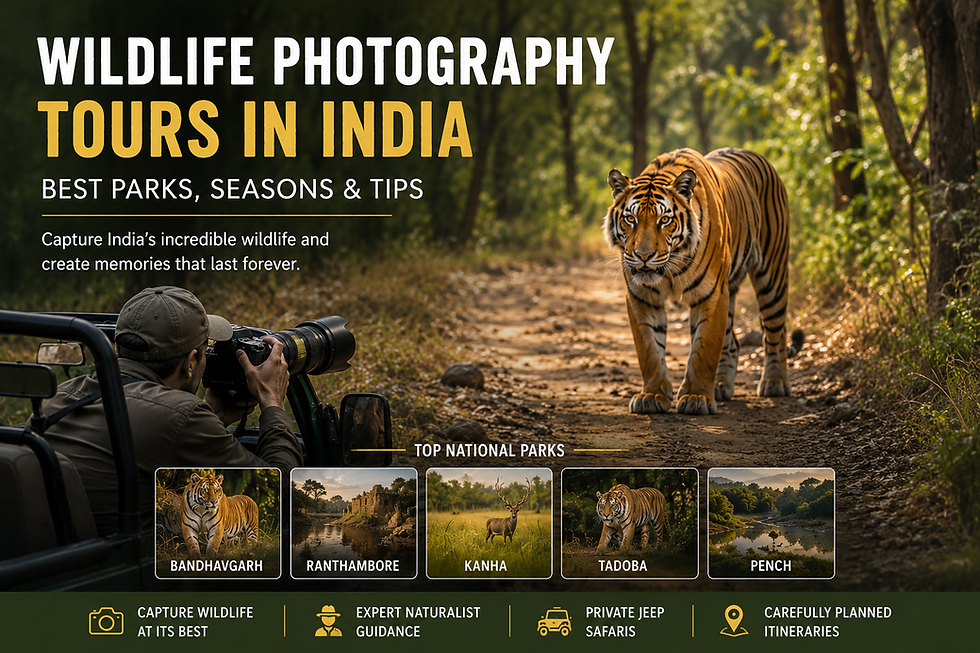
India is a dream destination for wildlife photographers. From the majestic Royal Bengal Tiger roaming through dense forests to colorful birds, elusive leopards, elephants, and diverse landscapes, the country offers endless opportunities for capturing nature at its finest. Whether you are a professional photographer or an enthusiastic beginner, Wildlife Photography Tours in India provide unforgettable experiences and exceptional photographic opportunities.
With over 100 national parks and numerous wildlife sanctuaries, India is home to some of the world's richest biodiversity. Every forest tells a different story, every safari offers a new perspective, and every sighting creates a chance to capture a once-in-a-lifetime moment.
In this guide, we explore the best wildlife photography destinations, the ideal seasons for photography tours, and essential tips to help you make the most of your wildlife safari in India.
Why Choose Wildlife Photography Tours in India?
Unlike ordinary wildlife vacations, dedicated photography tours are designed to maximize your chances of capturing incredible wildlife images. These tours focus on wildlife behavior, optimal lighting conditions, strategic safari planning, and expert guidance.
India's diverse ecosystems allow photographers to capture:
Royal Bengal Tigers
Leopards
Asiatic Lions
Asian Elephants
Sloth Bears
One-Horned Rhinoceroses
Rare birds and migratory species
Stunning landscapes and forest ecosystems
The combination of rich wildlife and dramatic natural settings makes India one of the best wildlife photography destinations in the world.
Best National Parks for Wildlife Photography in India.
Bandhavgarh National Park
Bandhavgarh National Park is often considered the ultimate destination for tiger photography in India. The park has one of the highest tiger densities in the country, making it a favorite among wildlife photographers.
Photographers visit Bandhavgarh for:
Frequent tiger sightings
Dense forest backdrops
Dramatic wildlife encounters
Excellent opportunities for close-range photography
The park's varied terrain and rich wildlife population create ideal conditions for capturing stunning wildlife images.
Ranthambore National Park
Located in Rajasthan, Ranthambore National Park combines wildlife with history. Ancient ruins, lakes, and open landscapes provide unique compositions rarely found elsewhere.
Wildlife photographers love Ranthambore because:
Tigers are often seen in open areas
Historic forts create iconic backgrounds
Excellent opportunities for storytelling photography
Beautiful sunrise and sunset safari conditions
For photographers seeking artistic and dramatic wildlife images, Ranthambore is an exceptional choice.
Kanha National Park
Kanha is famous for its scenic beauty and diverse wildlife. Vast grasslands, sal forests, and misty mornings create magical photography opportunities.
Highlights include:
Tigers and leopards
Barasingha (swamp deer)
Birdlife
Beautiful landscape photography
Kanha is perfect for photographers who enjoy combining wildlife and nature photography in a single destination.
Tadoba National Park
Tadoba has emerged as one of the top destinations for tiger photography tours in India. The park is renowned for its reliable tiger sightings and active wildlife movement.
Photographers often choose Tadoba because:
Tigers are frequently spotted near water bodies
Open forest visibility improves photography conditions
Fewer crowds compared to some popular parks
Excellent opportunities for action shots
For serious wildlife photographers, Tadoba offers some of India's most rewarding safari experiences.
Pench National Park
Pench inspired Rudyard Kipling's famous The Jungle Book and remains one of India's most photogenic wildlife reserves.
Photographic highlights include:
Tigers
Leopards
Wild dogs
Deer species
Rich birdlife
The park's varied landscapes provide excellent opportunities for both wildlife and habitat photography.
Best Seasons for Wildlife Photography Tours in India.
Choosing the right season significantly impacts the quality of your photography experience.
Winter Season (October to February)
Winter offers pleasant weather and beautiful natural lighting. Morning mist, golden sunlight, and lush post-monsoon forests create ideal photography conditions.
Best for:
Landscape photography
Bird photography
General wildlife photography
Comfortable safari experiences
Many photographers prefer winter for its softer light and scenic jungle atmosphere.
Summer Season (March to June)
Summer is widely regarded as the best season for tiger photography in India.
As temperatures rise, wildlife gathers around water sources, making animal sightings more predictable.
Benefits include:
Higher tiger sighting probability
Clear forest visibility
Dramatic wildlife behavior
Excellent action photography opportunities
Professional wildlife photographers often prioritize summer safaris because of the increased chances of capturing memorable tiger images.
Monsoon Season (July to September)
Although some national parks close during the monsoon, the season offers unique photography opportunities.
Highlights include:
Vibrant green landscapes
Dramatic skies
Forest scenery
Bird photography
Monsoon is ideal for photographers interested in nature and landscape photography rather than tiger-focused safaris.
Essential Wildlife Photography Tips.
Understand Animal Behavior
Great wildlife photography goes beyond technical skills. Understanding animal behavior helps photographers anticipate movement and prepare for the perfect shot.
Experienced naturalists often provide valuable insights about animal habits, territories, and activity patterns.
Use the Right Equipment
A quality telephoto lens is one of the most important tools for wildlife photography.
Recommended gear includes:
DSLR or mirrorless camera
300mm to 600mm telephoto lens
Extra batteries
Memory cards
Lens cleaning kit
However, even beginner photographers can capture amazing images with modern cameras and proper guidance.
Focus on Light
Lighting plays a critical role in wildlife photography.
The best times for photography are:
Early morning safaris
Late afternoon safaris
Golden hour conditions
Avoid harsh midday sunlight whenever possible.
Be Patient
Wildlife photography requires patience. Some of the most rewarding images come after hours of waiting and observation.
Patience allows photographers to capture:
Natural animal behavior
Rare interactions
Unique compositions
Action moments
Respect Wildlife
Ethical wildlife photography is essential.
Always:
Follow park regulations
Maintain safe distances
Avoid disturbing animals
Listen to guides and naturalists
Responsible photography helps protect wildlife and ensures sustainable tourism practices.
Why Expert Naturalists Make a Difference.
Many successful wildlife photographs result from the expertise of experienced safari guides and naturalists.
Professional naturalists help photographers by:
Tracking animal movements
Interpreting alarm calls
Understanding wildlife behavior
Positioning safari vehicles effectively
Identifying the best photography opportunities
Their knowledge often transforms a regular safari into an extraordinary photography expedition.
Customized Wildlife Photography Tours with India Tiger Safari.
Wildlife photography often requires more than simply visiting a national park. Factors such as the choice of destination, safari timing, experienced naturalists, and access to quality wildlife habitats can significantly influence the overall experience.
For travelers interested in Wildlife Photography Tours in India, carefully planned itineraries can help maximize opportunities for observing and photographing wildlife in its natural environment. Popular destinations such as Bandhavgarh, Ranthambore, Kanha, Pench, Tadoba, and Satpura offer diverse landscapes and unique wildlife encounters throughout the year.
At India Tiger Safari, wildlife journeys are designed around individual interests, whether the focus is tiger photography, birdwatching, nature exploration, or visiting multiple national parks during a single trip. Customized safari planning, experienced naturalist guidance, private jeep safaris, and thoughtfully selected accommodations help create a more rewarding wildlife experience.
Whether you are hoping to photograph Bengal tigers in the forests of Central India or capture the rich biodiversity found across India's national parks, a well-planned safari can provide valuable opportunities to explore and document the country's remarkable wildlife heritage.
Conclusion
Wildlife Photography Tours in India offer an incredible opportunity to experience some of the world's most remarkable wildlife destinations. From the tiger-rich forests of Bandhavgarh and Tadoba to the scenic landscapes of Kanha and Pench, every park provides unique photographic rewards.
The right combination of destination, season, expert guidance, and patience can transform an ordinary safari into an unforgettable photography adventure. Whether you're hoping to capture a majestic Bengal tiger, rare bird species, or breathtaking jungle landscapes, India's wildlife reserves provide endless inspiration behind the lens.
With thoughtful planning and expert-led safari experiences, your wildlife photography journey in India can become a collection of extraordinary moments and images that will be treasured for years to come.

Comments